Why Most Small Business Websites Don't Get Enquiries
Your website looks fine. But 'fine' doesn't pay the bills. Here's why it's not converting — and how to fix each problem.

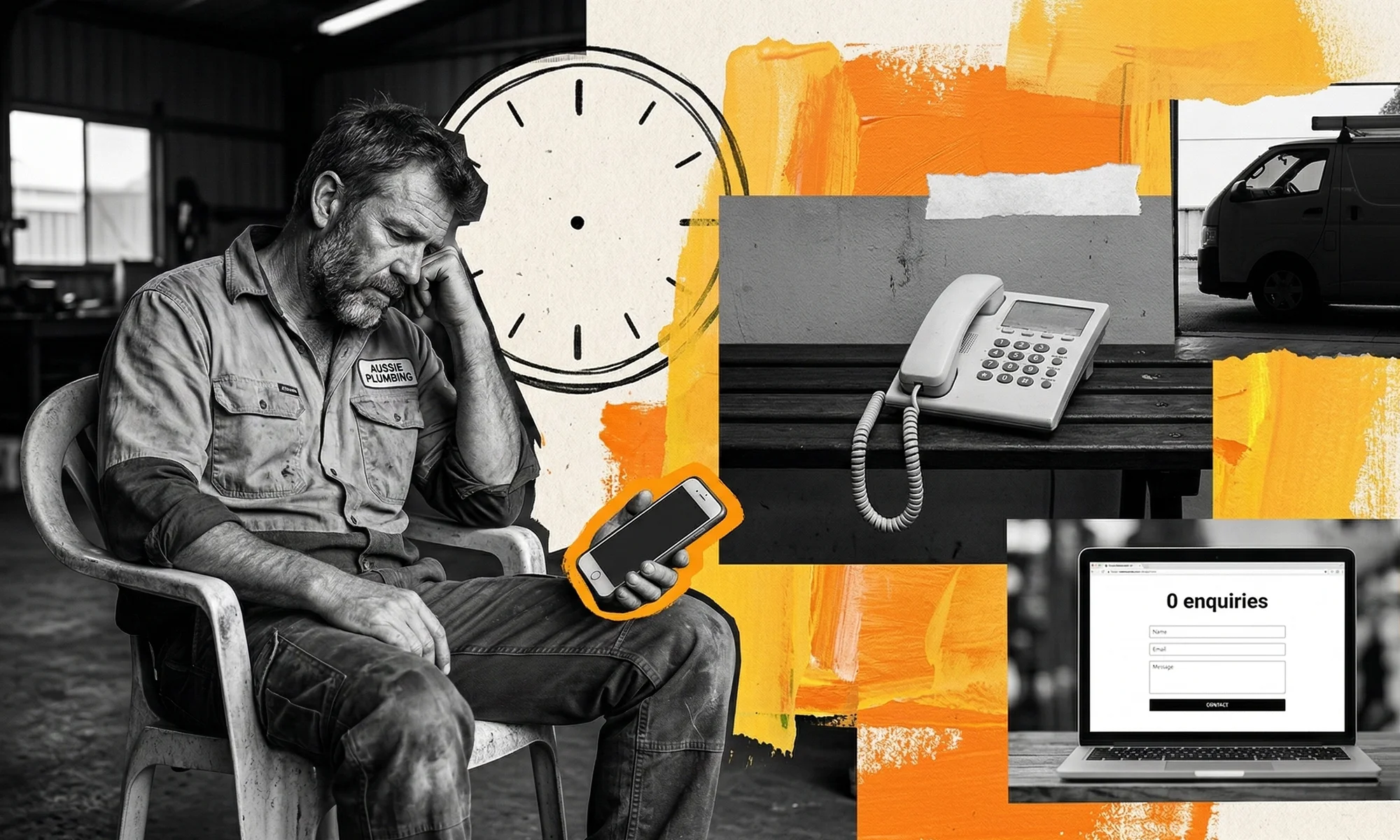
You’ve got a website. It looks decent. Maybe you even paid good money for it a few years back.
But your phone isn’t ringing. Your contact form is collecting dust. And that “Get a Free Quote” button? Might as well not exist.
You’re not alone. Most small business websites in Australia have the same problem. They exist, but they don’t work.
Here’s why.
1. Your Website Is a Brochure, Not a Salesperson
This is the big one. Most business websites read like a company profile you’d hand out at a networking event. Logo at the top, a paragraph about how you’ve been “proudly serving the community since 2003,” a list of services, and a contact page.
That’s a brochure. And brochures don’t sell anything.
A website that actually gets enquiries does something completely different. It speaks directly to the person visiting. It understands their problem, agitates it, and then shows them exactly why you’re the one to fix it.
Think about the last time you hired someone. You didn’t care about their mission statement. You cared about whether they understood your problem and could solve it fast.
Your website needs to do the same thing.
2. There’s No Clear Next Step
Go look at your website right now. If someone lands on your homepage, what are they supposed to do?
If the answer is “find the contact page in the navigation menu,” you’ve already lost them.
Every page on your site needs a clear, obvious call to action. Not buried at the bottom. Not hidden behind three clicks. Right there, above the fold, impossible to miss.
“Call now for a free quote.” “Book your appointment online.” “Get a free site audit.”
One action. Make it obvious. Make it easy.
Pro tip: Your call to action should tell visitors exactly what happens next. “Get a Free Quote” is better than “Contact Us” because it sets an expectation. The visitor knows they’ll receive something of value, not just fill out a form and hope for the best.
3. You’re Talking About Yourself Instead of Them
Here’s a quick test. Go to your homepage and count how many times you use the word “we” versus the word “you.”
If “we” wins, your website is talking about itself. And nobody cares about your business as much as you do. Especially not someone who just Googled “plumber near me” at 9pm with a leaking pipe.
They care about their problem. They want to know you understand it, you’ve fixed it before, and you can fix it now.
Flip the script. Lead with their pain, not your credentials.
4. It’s Slow, Outdated, or Broken on Mobile
According to Google’s research, 53% of mobile users will leave a website that takes longer than 3 seconds to load. And in Australia, over half of all web traffic now comes from mobile devices.
If your site was built a few years ago and hasn’t been touched since, there’s a good chance it’s slow, doesn’t look great on mobile, and might even have broken links or outdated information.
You wouldn’t let your shopfront window display get dusty and cracked. Your website deserves the same attention.
5. There’s Zero Reason to Trust You
Put yourself in your customer’s shoes. They’ve never heard of you. They found you on Google alongside four other businesses. Why should they pick you?
If your website doesn’t answer that question within 10 seconds, they’ll hit the back button and try the next result.
Trust signals matter. Reviews, testimonials, Google ratings, industry certifications, photos of your actual team and work. These aren’t “nice to have.” They’re the difference between an enquiry and a bounce.
A line that says “Over 500 happy customers” with a 4.9-star Google rating does more selling than three paragraphs of copy ever will.
Action Items
Audit your homepage right now.
- Open your website on your phone. Does it load in under 3 seconds? Test it at Google PageSpeed Insights.
- Is there a clear call to action visible without scrolling? If visitors have to hunt for how to contact you, most won’t bother.
- Count “we” vs “you” on your homepage. If “we” wins, your copy is talking about yourself instead of your customer’s problem.
Add trust signals.
- Display your Google review rating and number of reviews on your homepage.
- Add a short testimonial or customer quote above the fold.
- Include any industry certifications, licences, or association memberships.
Fix the basics.
- Make sure your phone number is clickable on mobile (not an image, a real link).
- Update any outdated information, photos, or copyright dates.
- Check that your contact form actually sends emails. You’d be surprised how often it doesn’t.
Want to Know Exactly What’s Holding Your Site Back?
We offer a free, no-obligation website audit for Australian small businesses. We’ll look at your site, tell you what’s working, what isn’t, and give you a clear action plan. Whether you work with us or not.
No sales pitch. Just straight answers.