Local SEO Australia: The Only Checklist Small Businesses Actually Need
The local SEO Australia checklist for small businesses. Get into the Google map pack with these five signals most businesses are missing.

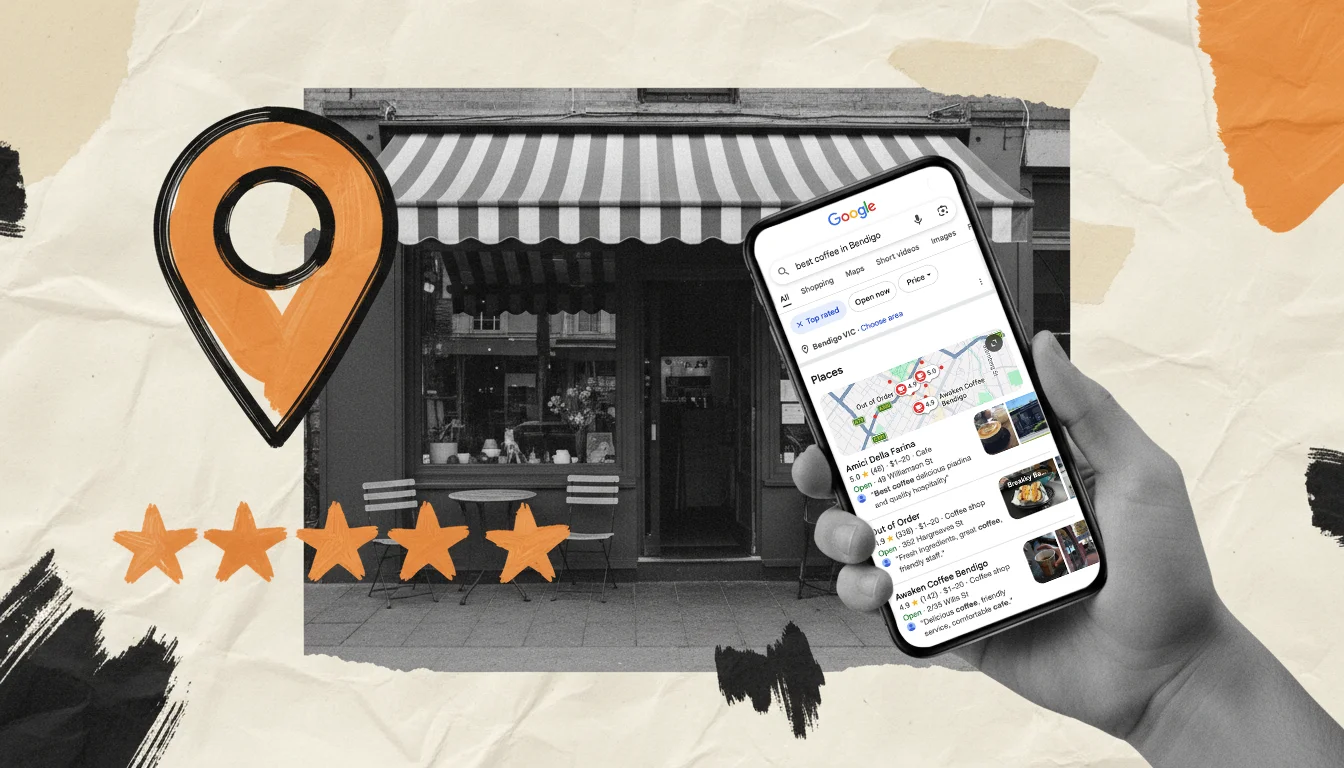
Forty-six percent of all Google searches have local intent [1]. That’s nearly half of everyone searching Google right now, looking for a business in their suburb or city. If you’re not showing up in those results, you’re invisible to half your potential customers before they even find out you exist.
Most Small Businesses Stop Too Early
Most Australian small businesses have done the basics. They’ve got a website. They’ve set up a Google Business Profile. They’ve listed themselves on a couple of directories. And then they’ve assumed that’s enough.
It’s not.
Local SEO isn’t a setup task. It’s a system with five distinct signals, and Google weighs all of them when deciding who shows up in the local map pack.
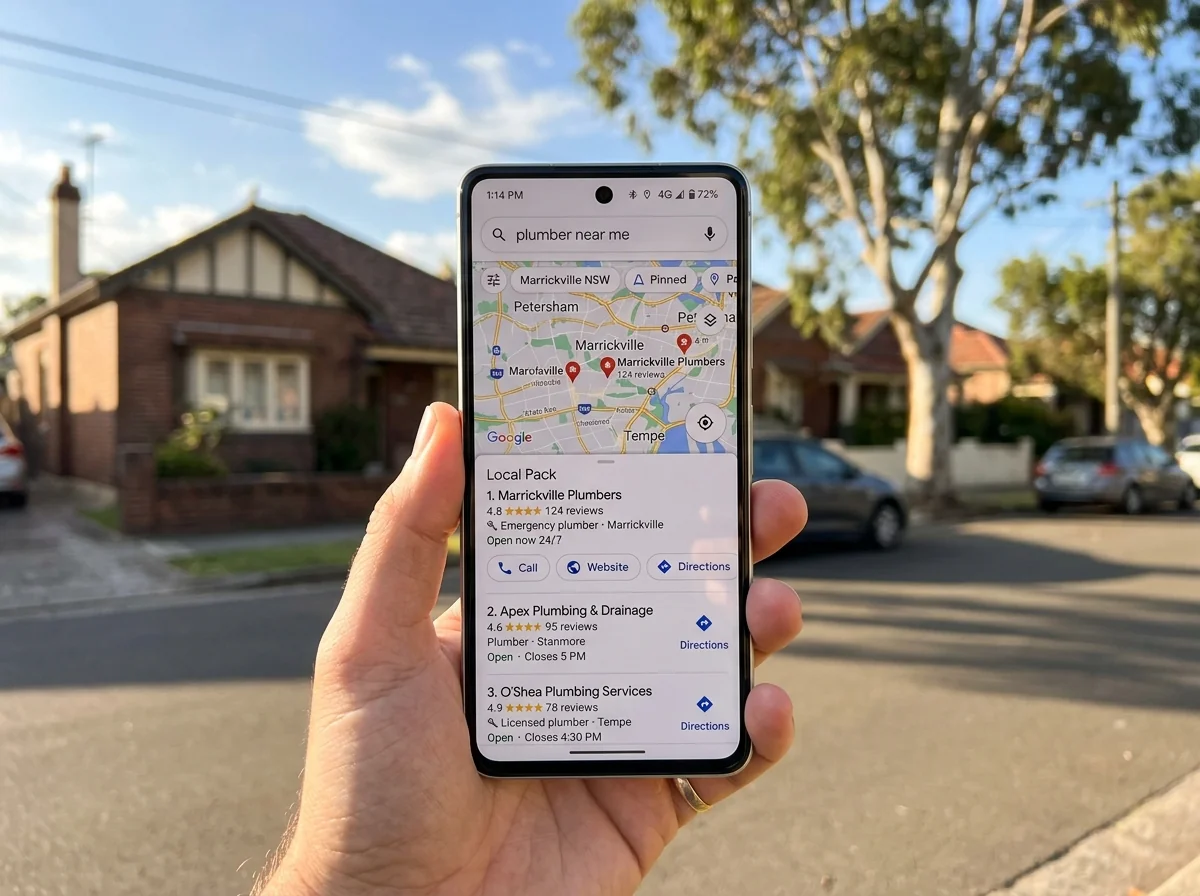
The local map pack is the block of three business listings that appears at the top of Google when someone searches “plumber Parramatta” or “physio near me.” That’s prime real estate. The top three results in that pack capture 44% of all clicks for local-intent searches [2]. The remaining spots on page one split what’s left. Page two gets almost nothing.
If you’re not in the top three, you’re competing for scraps.
The Five Signals Google Actually Uses
Here’s what most business owners don’t realise: local rankings aren’t about having the most money or the flashiest website. They’re about giving Google the right signals in the right places, consistently.
1. Your Google Business Profile (GBP). This is your listing in Google Search and Google Maps. A complete, verified, and actively maintained GBP gets seven times more clicks than an empty or unverified one [3]. Most businesses set it up once and forget about it. The ones ranking at the top treat it like a live channel: posting updates, adding photos, and responding to reviews. We wrote a full guide on how to optimise your Google Business Profile step-by-step if you want to go deeper on this one.
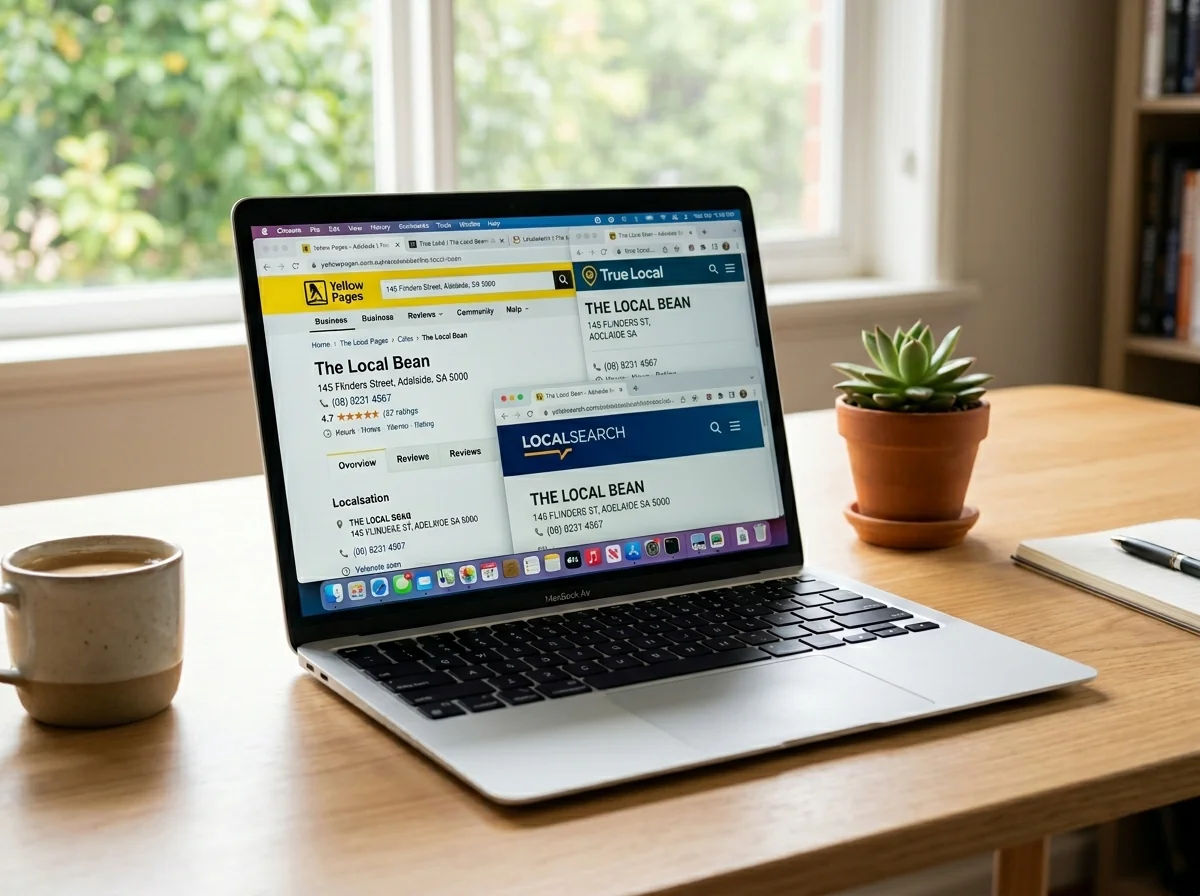
2. Citation consistency. A citation is any online mention of your business name, address, and phone number (NAP). When those details match exactly across every directory, Google gains confidence that your business is legitimate. When they’re inconsistent (different phone number on Yellow Pages, old address on True Local), your local rankings suffer. This is one of the most common problems Australian small businesses have, and one of the easiest to fix once you know about it.
Pro tip: Before building new citations, audit the ones you already have. Inconsistent NAP details do more damage than missing ones. One wrong listing on a high-authority directory can drag down everything else you've built.
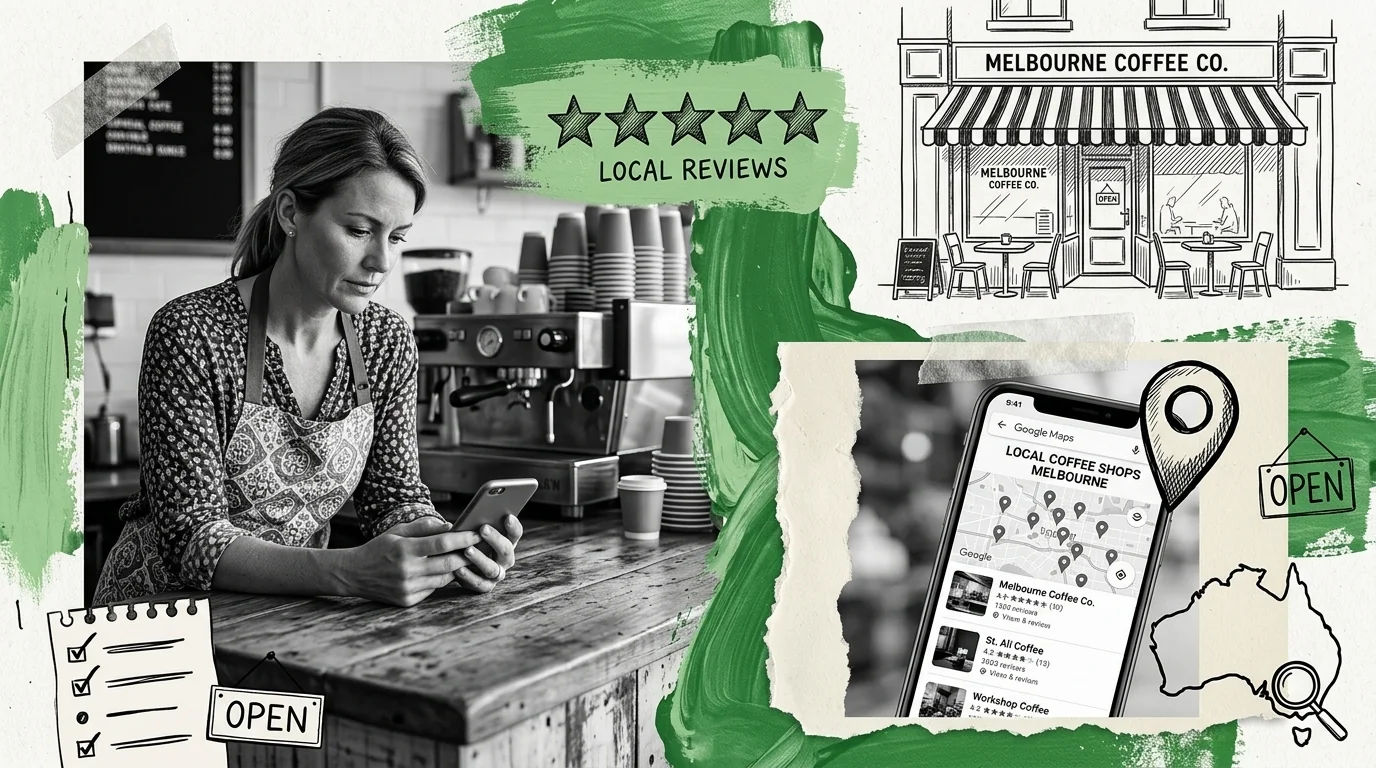
3. Review velocity. Reviews don’t just build trust with customers. They’re a direct ranking signal. Google pays attention to how many reviews you’re getting and how recently you’ve received them. A business with 80 reviews at 4.3 stars will consistently outrank a competitor with 12 reviews at 5.0 stars. Volume and recency beat perfection. Response rate matters too. Replying to every review (positive or negative) tells Google the listing is actively managed, and it builds trust with the next customer reading them.
4. Local landing pages. If you serve Penrith, Parramatta, and Chatswood, a single “Sydney” page won’t capture searches in each of those areas. Suburb-specific pages that target “electrician Penrith” or “dentist Parramatta” let you match what people are actually typing into Google. Without them, you’re leaving hyper-local traffic to competitors who’ve done the work.
Warning: Don't duplicate one page and swap the suburb name. Google filters out near-identical "doorway pages" as low-value content, and that stance has hardened in recent core updates. Each suburb page needs genuinely unique material on it. Local project photos, suburb-specific service notes, named team members, or area-specific FAQs. Without that, the pages can actively hurt your rankings instead of helping.
5. Structured data (schema markup). Schema is code added to your website that tells Google, in a format it reads directly, what your business does and where it operates. Customers never see it. Google uses it to confirm you’re a relevant local result. Most small business websites don’t have it, which makes it a straightforward win for anyone who does. If you’re on WordPress, Shopify, or Squarespace, free SEO plugins (Rank Math, Yoast, or platform-native settings) can install LocalBusiness schema in a few clicks. No developer required.
Where Local Search Is Heading
Two shifts worth knowing about as you do this work.
Google now shows AI-powered summaries at the top of many local searches, pulling answers directly from the businesses with the most consistent, well-structured information online. The five signals above are exactly what feeds those summaries. Get them right and you’re not just ranking, you’re being quoted.
The second shift is what SEO people call “entity authority.” Google is paying closer attention to whether other reputable sources (local news sites, your council, the chamber of commerce, industry directories) actually mention and confirm your business. A mention in a regional newspaper story or a local sponsorship now does more for your rankings than another generic directory listing.
Where to Start
None of these five signals are complicated. They’re just work that most businesses haven’t got around to yet.
You don’t need an agency contract or a technical background to start. You need a clear order of operations and the discipline to follow through.
Start with your Google Business Profile. Make sure it’s verified and that every field is filled in: primary business category, operating hours, services offered, at least ten photos, and a description that explains what you do and where you do it.
Then tackle citations. Get listed on the main Australian directories: Yellow Pages, True Local, Yelp Australia, and your local council’s business directory. Before you start, lock in one definitive NAP format and use it everywhere. Write it down somewhere so you don’t introduce new inconsistencies as you go.
Once the foundations are solid, focus on reviews and suburb pages. These compound over time. Fifty reviews spread evenly across a year is worth more than fifty reviews in a single month. And one suburb page that ranks is worth more than a generic “we service all of Sydney” line buried in your footer.
Pro tip: Add a short review request to your post-job text or email. Something like: "Thanks for choosing us, [Name]. If you're happy with the work, a Google review helps us enormously." Most satisfied customers will do it when asked directly. Most businesses never ask.
This Is What We Build Into Every Site
Every Link Juice client site goes live with GBP completeness checked, citation consistency audited, suburb page structure in place, and schema markup installed. A great-looking website that doesn’t show up in local search isn’t doing its job. The two things have to work together.
If you’re not sure where you stand, a quick audit will tell you exactly what to fix first.
Your Local SEO Checklist
Set up the foundations.
- Claim and verify your Google Business Profile if you haven't already.
- Fill in every field: business name, primary category, hours, services, at least ten photos, and a plain-English description of what you do and where you do it.
- Write down one definitive NAP format (business name, address, phone number) and use it consistently everywhere.
- List your business on Yellow Pages, True Local, Yelp Australia, and your local council's business directory, using your definitive NAP format on every one.
- Add LocalBusiness schema markup to your site. If you're on WordPress, Shopify, or Squarespace, a free SEO plugin or platform setting handles it without code. If your site is custom-built, a developer can add it in under an hour.
Build momentum over time.
- After every job, send a short message asking for a Google review. Respond to every review you receive, positive or negative.
- Create a dedicated page for each suburb or area you serve, with genuinely unique content on each (local project photos, area-specific service notes, named team members). Don't duplicate one template across suburbs. That does more harm than good.
- Post an update to your GBP at least twice a month: a photo from a recent job, a seasonal tip, or a promotion.
- Audit your NAP details across all directories every six months. Business details change and listings drift over time.
- Track your local rankings monthly so you know what's working and when something needs attention.
Ready to find out where your site stands? We offer a free local SEO audit for Australian small businesses. We check your GBP, your citations, your suburb page structure, and your schema setup, then give you a clear list of what to fix first. Book a free 15-minute chat to get started.
Sources
- Local SEO Statistics & Facts Australia (2025) — Red Search
- 21 Local SEO Statistics That Matter in 2026 — Safari Digital
- State of Google Business Profile 2025 — BirdEye